
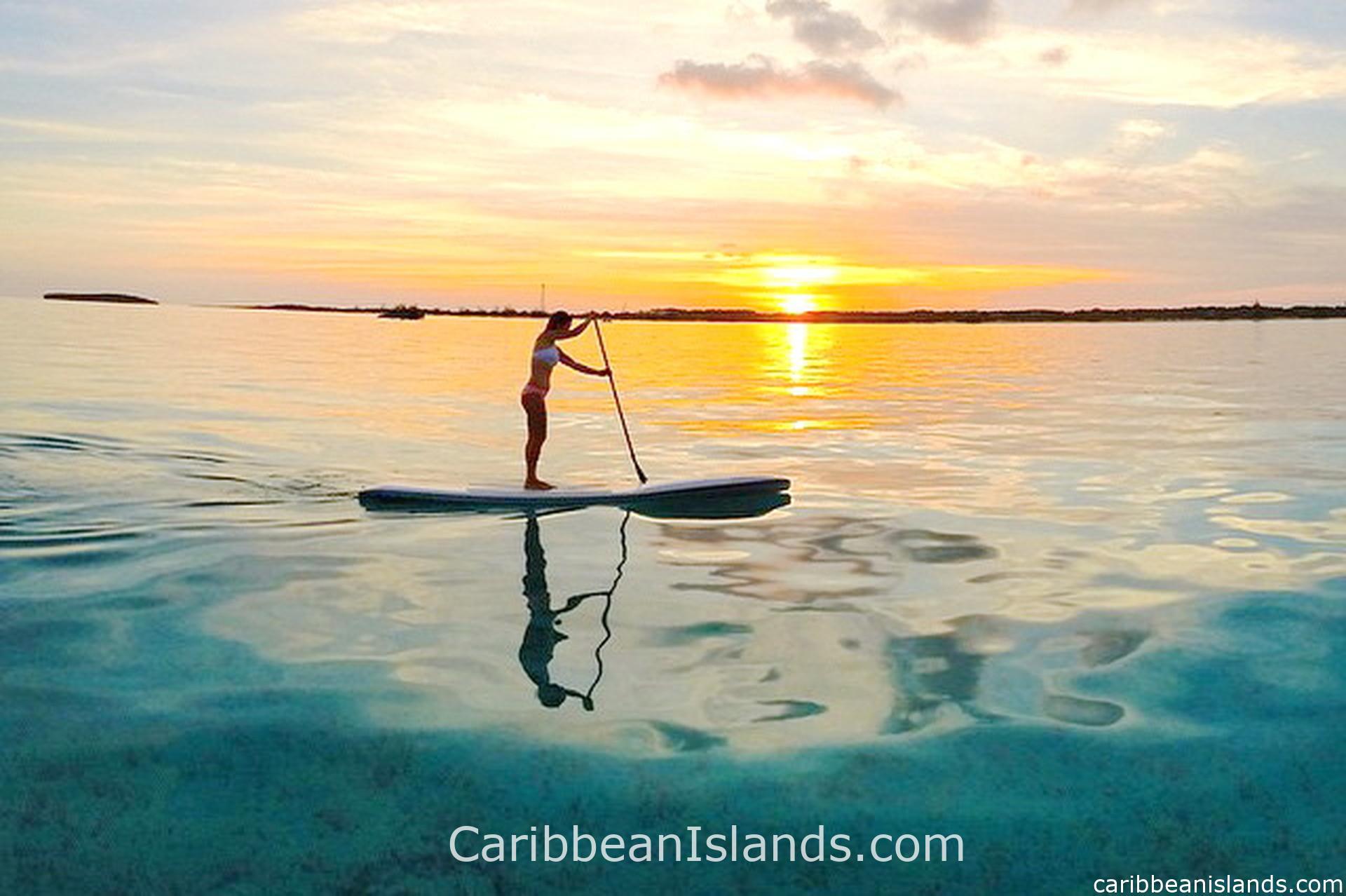
The Abacos are a chain of islands and cays in the northern Bahamas, and the boating capital of the country. The main island, Great Abaco, anchors the chain. Marsh Harbour, on Great Abaco, is the commercial hub and the entry point for most visitors. The outer cays, reached by ferry from Marsh Harbour, are where the Abacos' character lives: small Loyalist settlements, pastel wooden houses, narrow streets, and sheltered water that has drawn sailors for generations.
- Nearest airport: Leonard M. Thompson International Airport, Marsh Harbour (MHH / MYAM)
- Climate: Tropical. Warm and dry December to April, hot and wet June to October.
Why people visit the Abacos
Most visitors come for the water. The Sea of Abaco, the sheltered body of water running between Great Abaco and the outer cays, is calm enough for sailing and shallow enough for bonefishing. Just offshore, the sea floor drops 5,000 feet into the Atlantic, where blue marlin, sailfish, and tuna run year-round. The combination of flat water inside and deep water outside makes the Abacos one of the most complete fishing and sailing destinations in the Bahamas.
Hope Town on Elbow Cay is the most visited settlement in the outer cays. Its harbor is dominated by the Elbow Reef Lighthouse, a red and white striped tower built between 1862 and 1864 and one of the last kerosene-fueled, hand-cranked lighthouses in the world. The lighthouse appears on the Bahamian $10 bill. When it was built, the locals opposed it. Their income came from salvaging cargo from ships wrecked on the reef, and a lighthouse would stop the wrecks. Some sabotaged construction by sinking a barge carrying building materials. The lighthouse was built anyway, and the wrecking trade ended. Visitors can climb 101 steps to the top.
Green Turtle Cay, Man-O-War Cay, and Great Guana Cay each have their own character. Green Turtle Cay is known for its colonial architecture and the Albert Lowe Museum. Man-O-War Cay has a boat-building tradition dating to the 1800s. Great Guana Cay has a five-mile white sand beach and almost nothing else.
What made the Abacos
The Lucayan Taíno were here before Columbus. After the Spanish removed them, the Abacos stood largely empty. The islands gained their current character from a specific historical moment: the end of the American Revolution. When Britain lost the war in 1783, thousands of colonists who had remained loyal to the Crown were forced to leave. The Treaty of Paris offered them little. Britain traded East Florida to Spain and gave the Loyalists the Bahamas instead.
In the late summer of 1783, the first group of about 130 Loyalists left New York and landed on Great Abaco, founding a settlement called Carleton near today's Treasure Cay. More followed. By 1785 there were over 1,000 Loyalist refugees in the Abacos, spread across five or six settlements. Wyannie Malone, a widow from Charleston, South Carolina, founded Hope Town that same year. Her family name persists on the island today. The surnames Albury, Curry, and Lowe, common throughout the Abacos, were Loyalist family names. As late as 1912, sixty percent of Key West residents could trace their ancestry to the Bahamas, many of them Abaco Loyalists who had moved on for better opportunities.
The Loyalists tried cotton farming but the soil was poor. They turned to boat building, fishing, and wrecking. The construction of the Hope Town Lighthouse in 1863 ended the wrecking trade. The Abacos remained quiet for most of the twentieth century, sustained by fishing and a slow growth in yacht tourism after World War II.
On September 1, 2019, Hurricane Dorian made its first landfall at Elbow Cay in the Abacos as a Category 5 storm with sustained winds of 185 miles per hour, the strongest hurricane ever to hit the Bahamas. The storm stalled over the islands for nearly 48 hours. More than 75 percent of all homes in the Abacos were damaged or destroyed. More than 13,000 houses were destroyed outright. The Abacos suffered 87 percent of Dorian's total damage across the Bahamas. The official death toll was 74, but Bahamian officials estimated that more than 600 undocumented residents drowned and were washed out to sea. The Abacos are recovering and are open to visitors, but Dorian reshaped the islands in ways that are still visible.
What you find
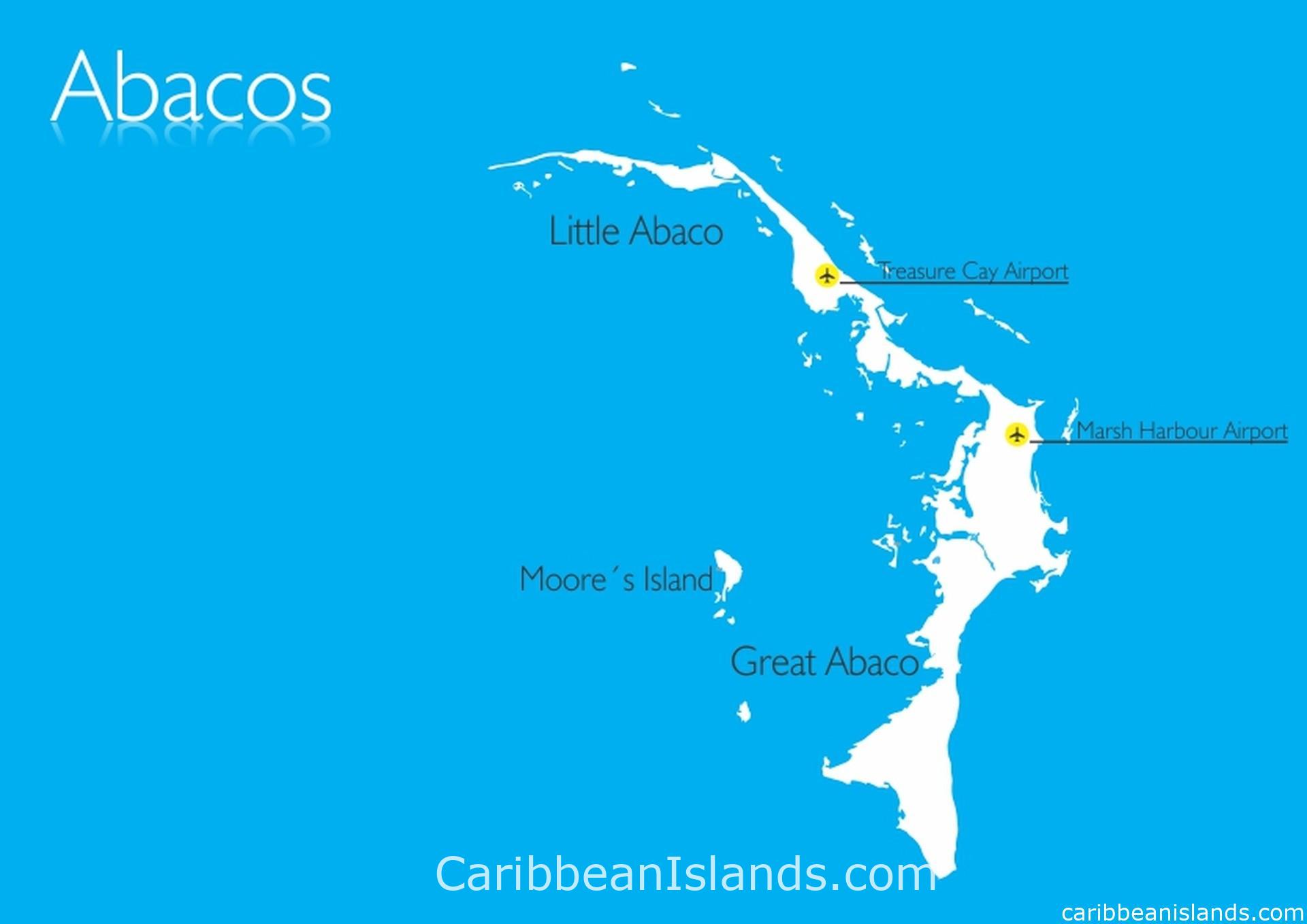
Great Abaco is the largest island in the chain, running roughly north to south. Marsh Harbour sits midway down the eastern coast and is the only town of any size. North of Marsh Harbour, Treasure Cay has a marina and a long beach. South of Marsh Harbour the island becomes quieter and less developed. The interior is pine forest. The national parks, including Abaco National Park and Pelican Cays Land and Sea Park, protect significant stretches of land and reef. The Abaco parrot, found nowhere else in the world, nests in the limestone caverns of the national park.
The islands of the Bahamas

Grand Bahama Island
Abacos, Bahamas

Exumas, Bahamas

Eleuthera and Harbour Island, Bahamas

Bimini, Bahamas

Andros, Bahamas

Berry Islands, Bahamas

Cat Island, Bahamas

Long Island, Bahamas

San Salvador, Bahamas

Inagua, Bahamas

Crooked & Acklins Islands, Bahamas

Mayaguana, Bahamas

The Bahamas