
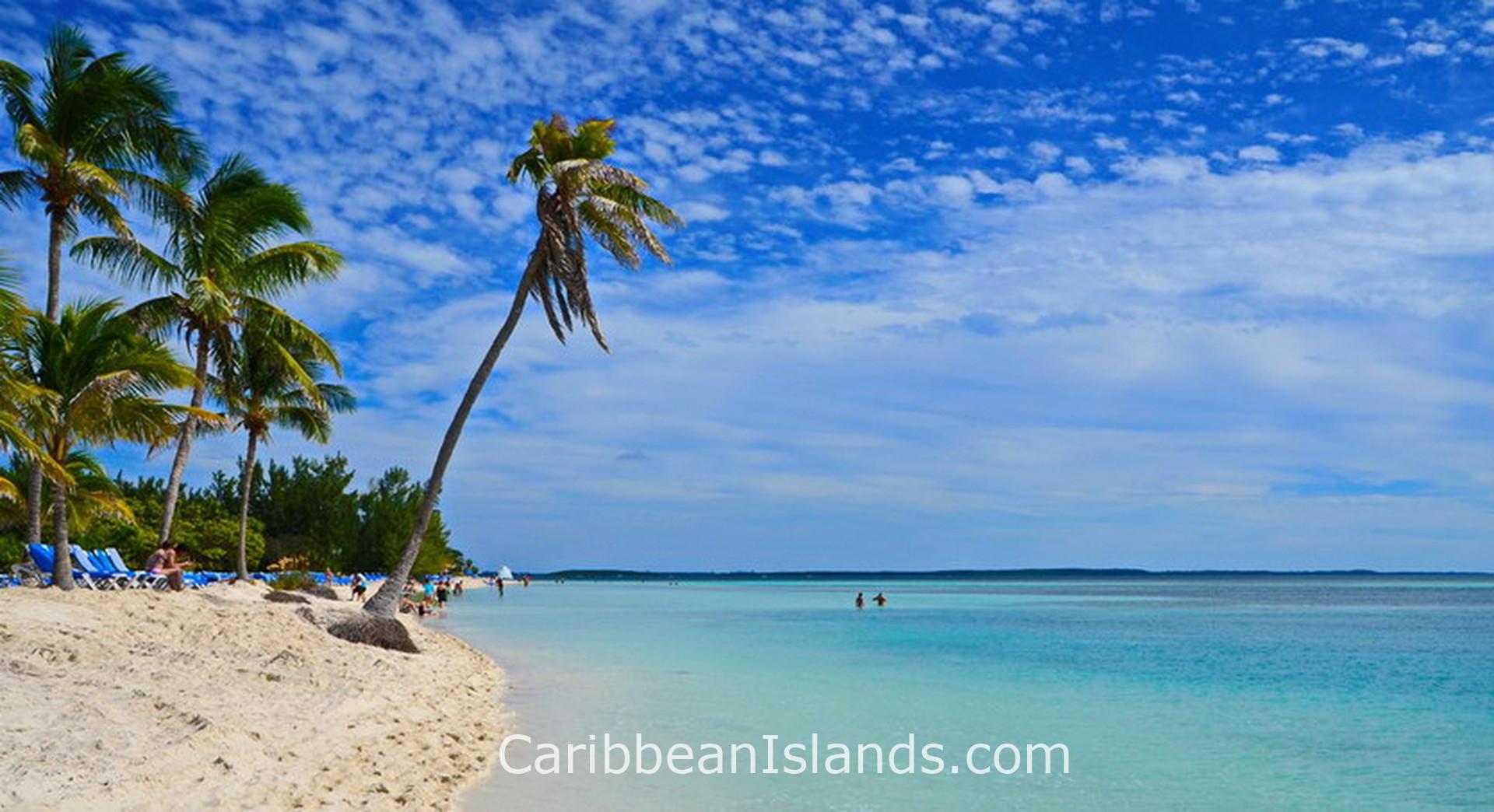
The Berry Islands are a chain of about 30 islands and more than 100 cays covering roughly 12 square miles of land, located between Nassau and Grand Bahama. Most islands are uninhabited. The total population of the chain is just over 1,000 people, concentrated in the settlement of Bullocks Harbour on Great Harbour Cay. The chain runs north to south along the southern edge of the Northeast Providence Channel, a major Atlantic shipping route. The islands are collectively nicknamed the Fish Bowl of the Bahamas.
- Nearest airports: Great Harbour Cay Airport (GHC / MYEM), Chub Cay International Airport (CCZ / MYBC)
- Climate: Tropical. Warm and dry December to April, hot and wet June to October.
Why people visit the Berry Islands
Fishing is the primary reason. Chub Cay, the southernmost island, sits at the edge of deep water where the Northeast Providence Channel meets the Tongue of the Ocean. The combination pushes billfish, tuna, wahoo, and amberjack into the area year-round. Chub Cay calls itself the Billfish Capital of the Bahamas. Access to the island is restricted to guests of Chub Cay Resort and Marina.
Two of the northern islands are private cruise line destinations. Norwegian Cruise Line has owned Great Stirrup Cay since 1977, making it one of the first private cruise islands in the Caribbean. Royal Caribbean leases the neighboring Little Stirrup Cay, which it markets as CocoCay. Between them, these two small cays receive more visitors than all the inhabited Berry Islands combined. The lighthouse on Great Stirrup Cay was built in 1863 by the Imperial Lighthouse Service and is still operational, now running on solar power. Its light is visible 20 miles out to sea.
Hoffman's Cay has a blue hole accessible from shore with a 20-foot cliff above it. Great Harbour Cay has bonefishing flats and a beach that most visitors on the cruise islands never see.
What made the Berry Islands
The Lucayan Taíno were here before Columbus. Bahamian wreckers worked the chain in the 1700s, salvaging cargo from ships wrecked on the surrounding reefs. The first formal settlement was established in 1836 when Bahamas Governor William Colebrooke settled a group of freed slaves on Great Stirrup Cay, two years after Britain abolished slavery in the Bahamas. Their descendants make up most of the permanent population today.
The 20th century brought a different kind of owner. Whale Cay was purchased in 1934 by Joanne Carstairs, a Standard Oil heiress and celebrated speedboat racer who set multiple world speed records. She ran the island as a private domain for decades. Little Whale Cay was later owned by Wallace Groves, the American financier who built Freeport on Grand Bahama under the 1955 Hawksbill Creek Agreement. He kept a private airstrip and a collection of exotic birds on the island. Some of those birds, including peacocks, are still there.
What you find
The Berry Islands have no large hotels. Accommodation is in small resorts, beach villas, and townhouses for rent. Great Harbour Cay is the only island with a settlement of any size. The rest of the chain is beaches, reefs, and private property. The shallow flats that make much of the chain inaccessible to larger boats are the same flats that make it exceptional for bonefishing. The islands have a reputation, repeated locally and widely, for attracting wealthy seasonal residents to the point where Great Harbour Cay is said to have more millionaires per square mile than anywhere else in the world. The permanent population is just over 1,000 people.


